
The Ria Formosa is one of the best places for birdwatching in Portugal. This protected lagoon along the Algarve coast, right next to Faro, mixes salt pans, salt marsh, tidal channels, freshwater lagoons and barrier islands, and every one of those habitats holds different birds. It sits on the migration route between Europe and Africa, so the cast changes with the seasons, but there is always something to watch. I trained as a marine biologist at the University of Algarve, studied the Ria Formosa from 2004 to 2011 and have guided in the Natural Park since 2019. This is the guide I give friends who ask where to start.
Why the Ria Formosa is so good for birds
The Ria Formosa Natural Park protects around 18,400 hectares and some 60 km of the eastern Algarve coast, from Ancão, west of Faro, to Manta Rota. A chain of sandy barrier islands shelters a lagoon that empties and fills twice a day with the tide. When the water drops, kilometres of mud and sand are exposed, full of worms, shellfish and small crustaceans: a feeding table for thousands of waders. Behind the lagoon, old and working salt pans offer shallow, salty water where flamingos and avocets feed, and quiet banks where birds rest and nest. Further inland, freshwater lagoons and reedbeds attract a completely different set of species.
The area is a wetland of international importance under the Ramsar Convention. You can read more about the park on the ICNF website.
The best birdwatching spots in the Ria Formosa
The Ludo and São Lourenço trails (Faro and Quinta do Lago)
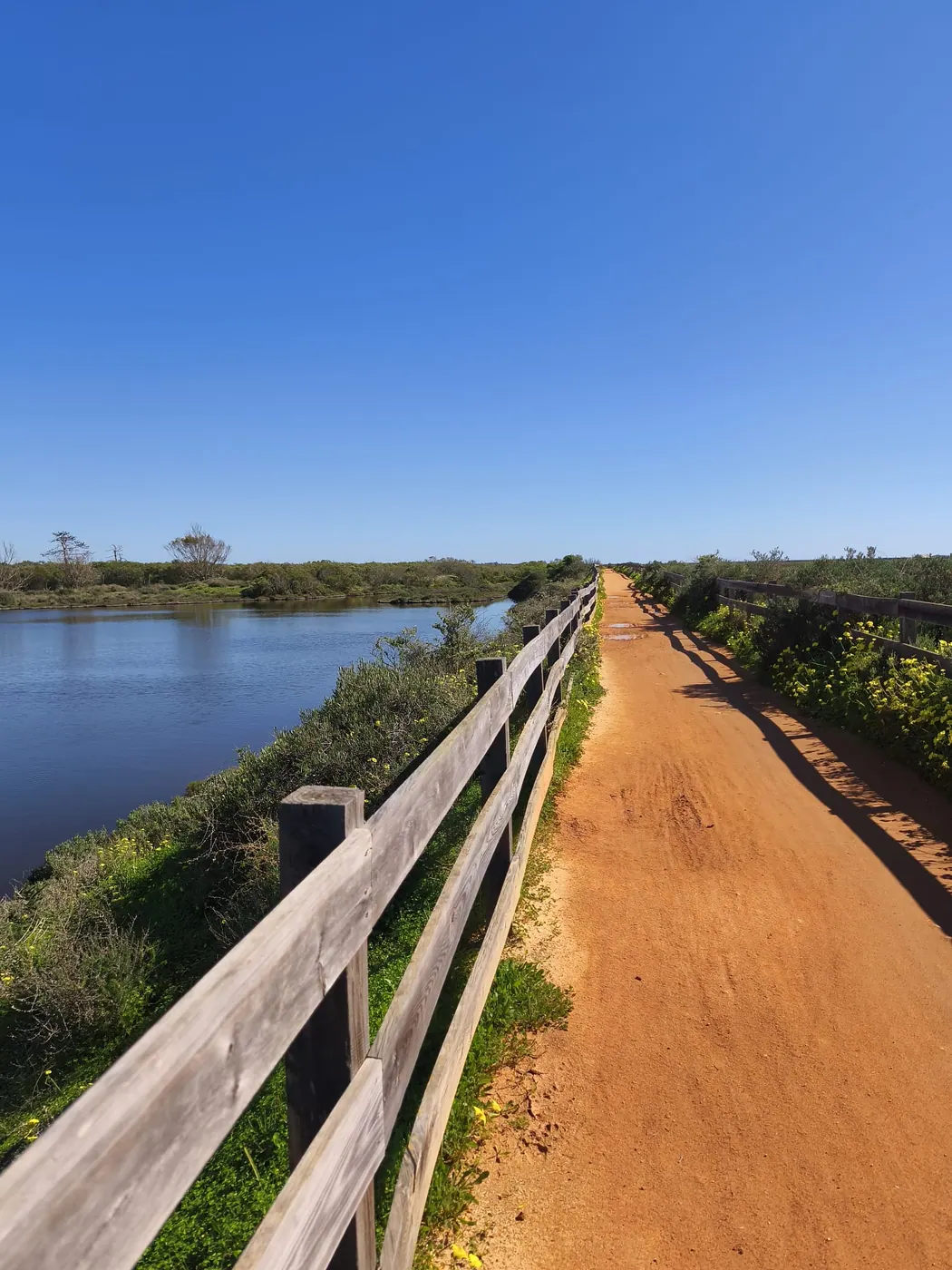
If you only have one morning, go to the Ludo. In about 9 km of flat walking, there and back, you cross salt pans, the edge of the lagoon, pine woods and two bird hides. The first hide looks out over the lagoon, where waders feed at low tide and the shellfish harvesters work the mudflats. The second, on the São Lourenço trail, faces a small freshwater lagoon with a very different mix of birds. I describe the full route in our Ludo Trail guide.
The salt pans around Faro
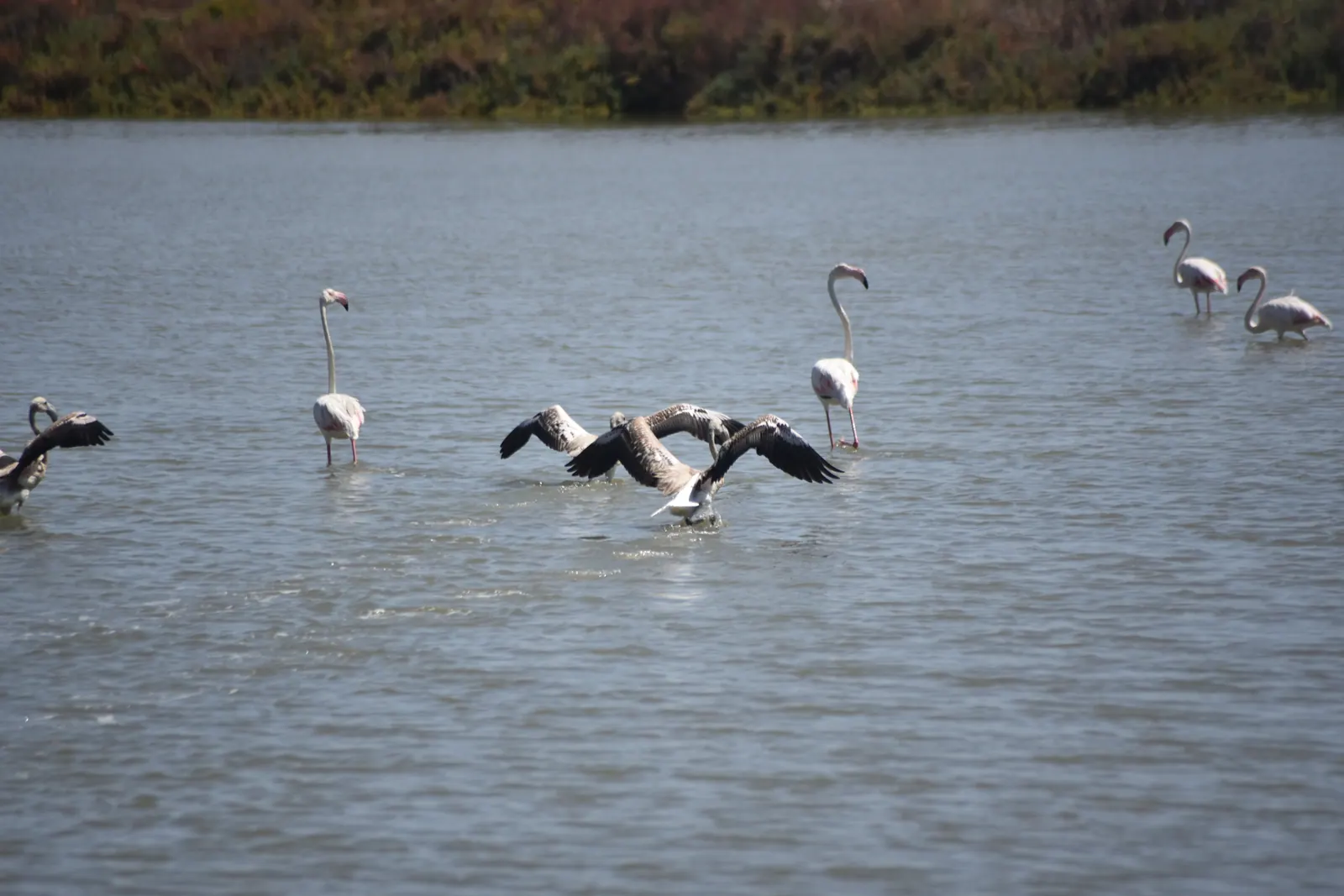
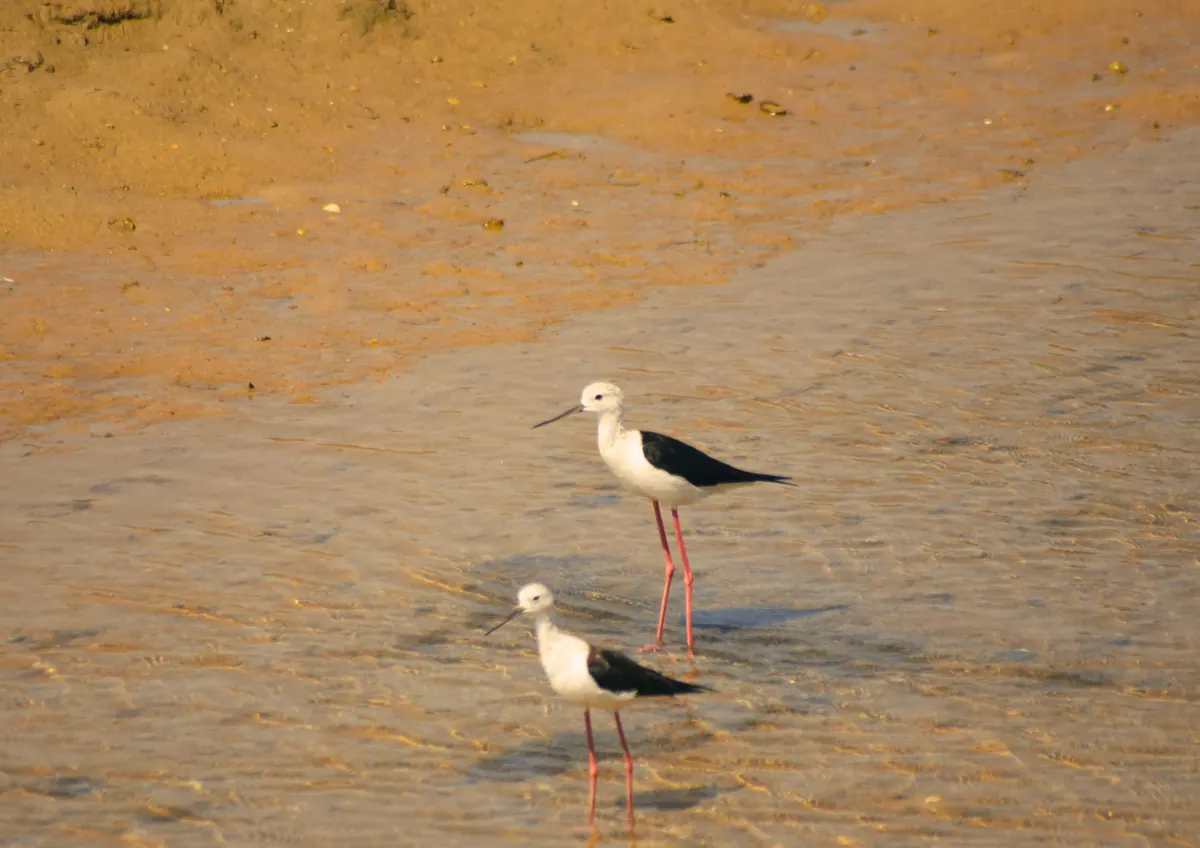
The salt pans next to the Ludo are a nesting and feeding area for a large variety of birds. This is where you are most likely to see flamingos, avocets, black-winged stilts and Kentish plovers at close range.
Quinta de Marim, Olhão
The headquarters of the Natural Park, east of Olhão, has a signposted trail through salt marsh, pine wood and a freshwater pond, with an old tide mill on the way. A good second outing, and easy with children.
The Tavira salt pans
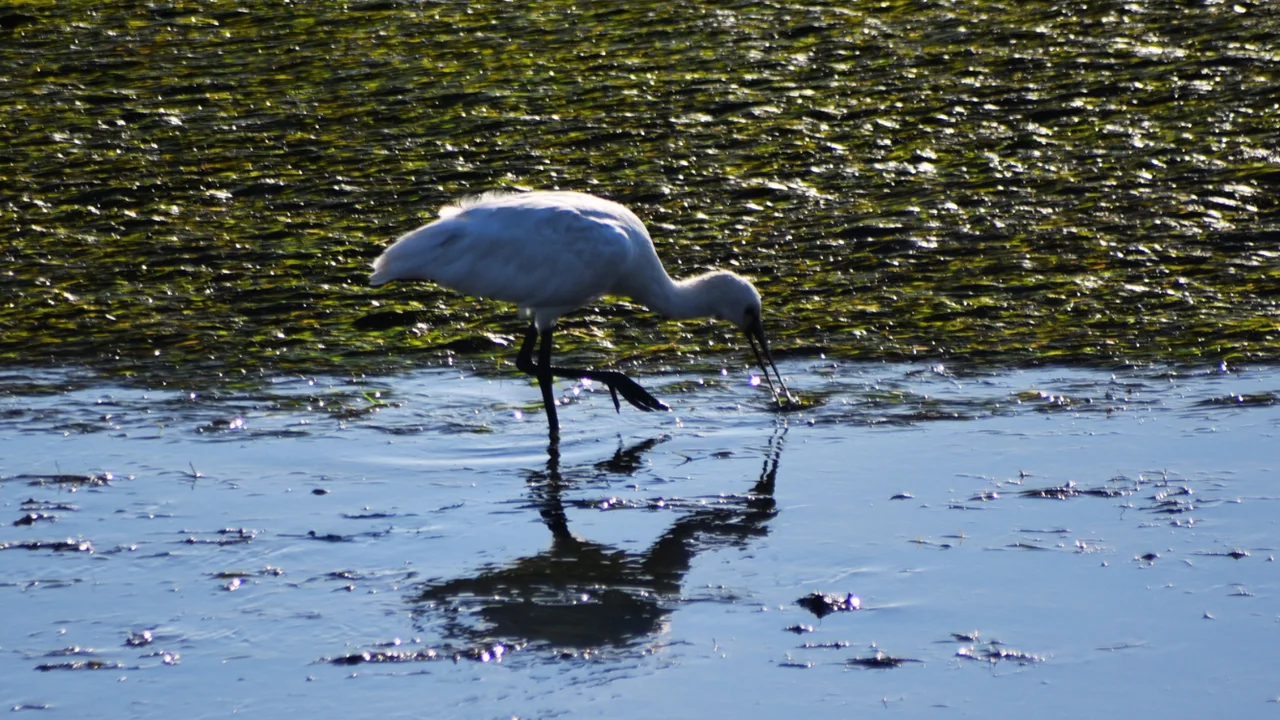
At the eastern end of the Ria Formosa, the salt pans around Tavira are excellent for flamingos, spoonbills and waders, especially in autumn and winter.
Beyond the Ria Formosa: more birding in the Algarve
- Castro Marim marshes, near the Spanish border: a nature reserve of salt pans and salt marsh, where the first successful flamingo colony in Portugal was recorded in 2021.
- Lagoa dos Salgados, between Albufeira and Armação de Pêra: a small coastal lagoon known for ducks, grebes and the western swamphen.
- Sagres: in autumn, the southwest tip of Portugal is a migration funnel for birds of prey and seabirds.
- Monchique: the hills behind the coast, for woodland and mountain species.
Birds you can see in the Ria Formosa
Nature has its own plans, so no guide can promise a sighting. These are the birds we see most often.
- Greater flamingo. Common in the salt pans and on the mudflats, and with us on every walk so far. More in our guide to flamingos in the Algarve.
- Western swamphen. The large purple bird of the reedbeds and freshwater lagoons, and the symbol of the park.
- Eurasian spoonbill. Sweeps its flat bill side to side through shallow water.
- White stork. Feeds in the fields and marshes and nests on rooftops, towers and trees.
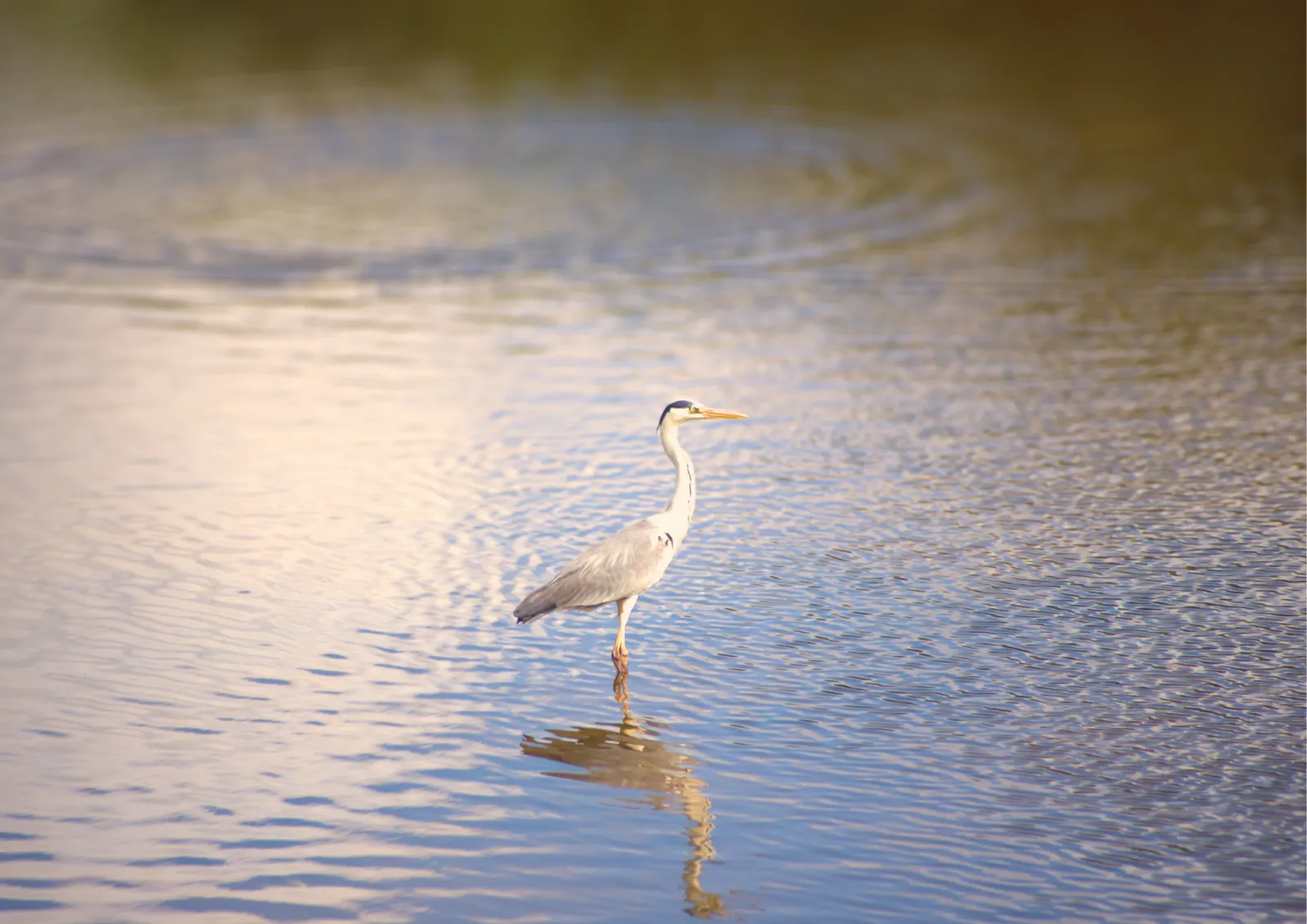
- Herons and egrets: grey heron, little egret, cattle egret and glossy ibis.
- Waders of the mudflats and tidal channels: pied avocet, common redshank, Eurasian oystercatcher, grey plover, black-tailed godwit, Kentish plover, sanderling and dunlin.
- Birds of prey and seabirds: osprey, Audouin's gull and little tern, which nests on the sandy islands.
- Around the edges: the Iberian magpie in the pines, and birds feeding on the grass of the golf courses near Quinta do Lago. Keep an eye on them as you walk past.
The best time for birdwatching, season by season
- Spring (March to May): migrants heading north stop to feed. Some days the mudflats are full.
- Summer (June to August): stilts, little terns and other species nest on the salt pans and islets. Flamingos stay in good numbers.
- Autumn (September to November): birds heading south rest here before crossing to Africa. One of the richest times of the year.
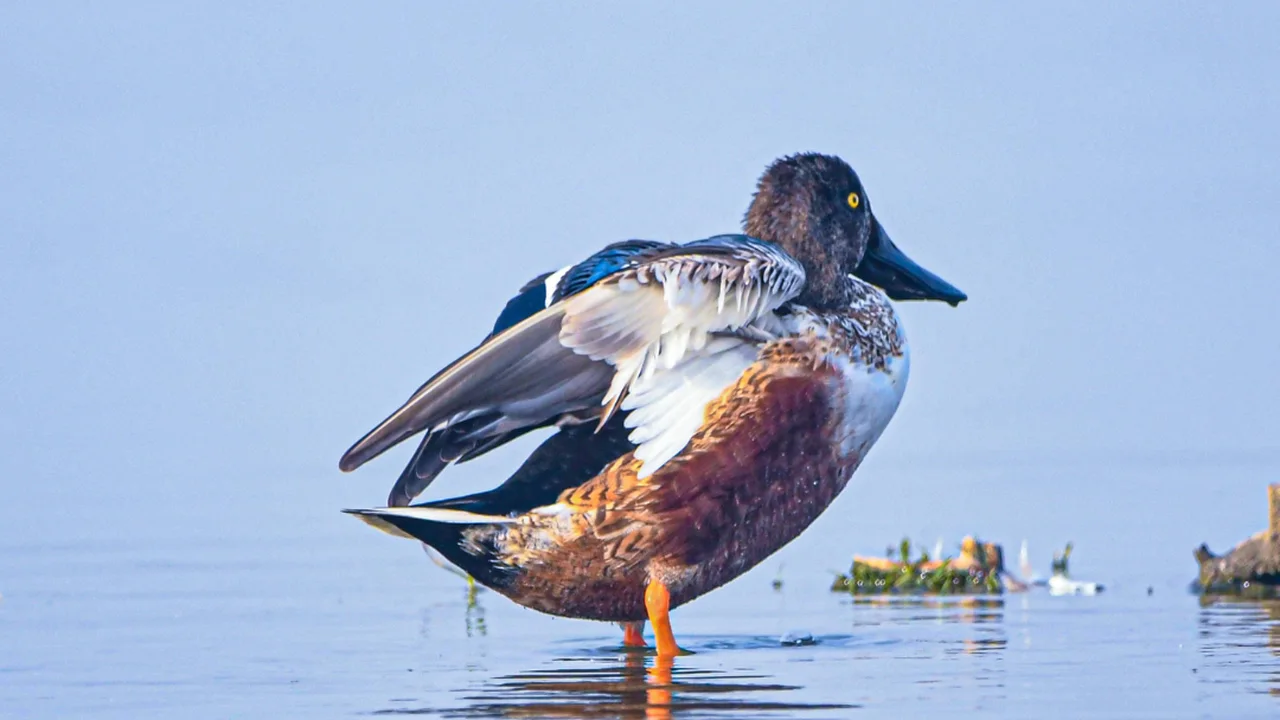
- Winter (December to February): ducks, waders and birds of prey spend the mild winter in the lagoon.
Time of day: early morning and late afternoon, when birds are most active and the light is soft.
Tides: on the lagoon itself, go with a falling tide or around low tide, when dozens of species feed on the exposed mud. On inland trails, a high or rising tide is better, because many birds move inland to rest. The Ludo combines both, the lagoon and the inland lagoons, so the tide is never a reason not to go.
How to watch birds without disturbing them
- Stay on the marked trails. Parts of the area are closed to protect nesting birds.
- Keep your distance. If a bird stops feeding to watch you, you are too close.
- Use binoculars or a telescope instead of getting closer.
- Be quiet near the hides, and never feed the birds.
- In the nesting season, from spring to early summer, give the salt pans and islets extra space.
What to bring
Binoculars (8x42 or 10x42 are ideal), water, sun protection and a hat, comfortable shoes, and a light layer in winter. A free identification app such as Merlin or eBird helps, and eBird also shows what other birders have seen recently.
Birdwatching with a guide
You can do all of this on your own. With a guide, you also get a telescope, the names of the birds, and the story of why they are there: the tides, the salt-making, the migration. That is what we do on our Birdwatching & Nature walk on the Ludo Trail, in small groups of up to 10 people.
Frequently asked questions
Is the Ria Formosa good for birdwatching?
Yes. It is one of the most important wetlands in Portugal, with resident, breeding and migrating birds all year.
When is the best time to see birds in the Algarve?
Spring and autumn bring the most species, with migration at its peak. Winter is excellent for ducks and waders, and summer for breeding birds.
Can I see flamingos in Faro?
Yes. The salt pans next to the Ludo Trail, a few minutes from Faro, are one of the best places to see them all year.
Do I need binoculars?
They make a big difference. If you do not have any, a guided walk usually lends or rents them.
Is birdwatching suitable for children?
Yes. The trails are flat, and most children love the flamingos and the telescope.
Can I go birdwatching on my own?
Yes. The Ludo Trail, Quinta de Marim and the salt pans are open to everyone. Stay on the trails and keep your distance from the birds.
Sources and further reading
- First Nature: Wildlife of Parque Natural da Ria Formosa (area, coastline and Ramsar status)
- LIFE Ilhas Barreira: Checklist of the birds of the Ria Formosa (PDF)
- Aves de Portugal: Ria Formosa birding site
- eBird: recent bird list for the Ria Formosa
- Salvafauna: When to go birding in the Algarve
- Birdingplaces: Caminho do Ludo
- ICNF, the Portuguese nature conservation institute: icnf.pt