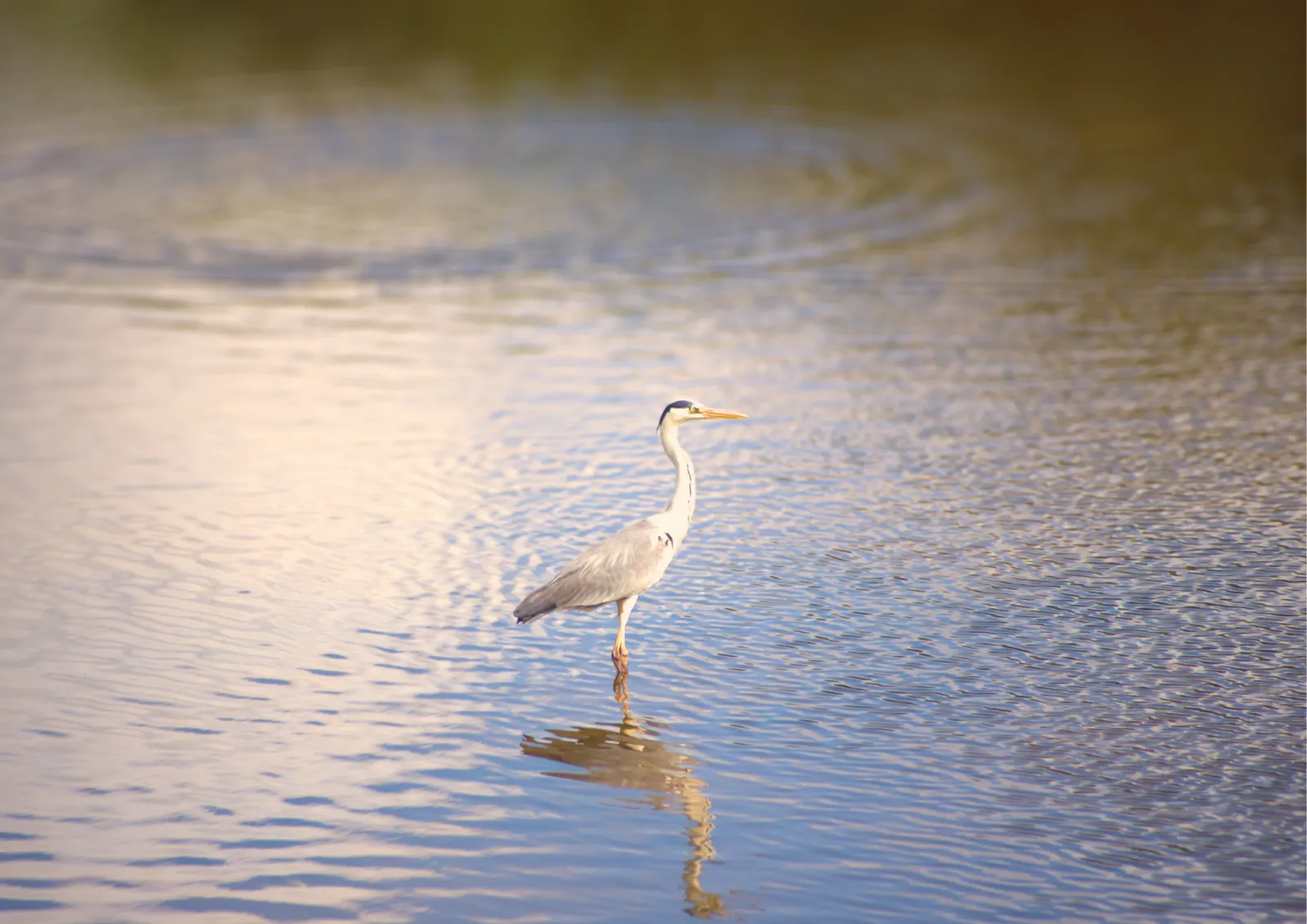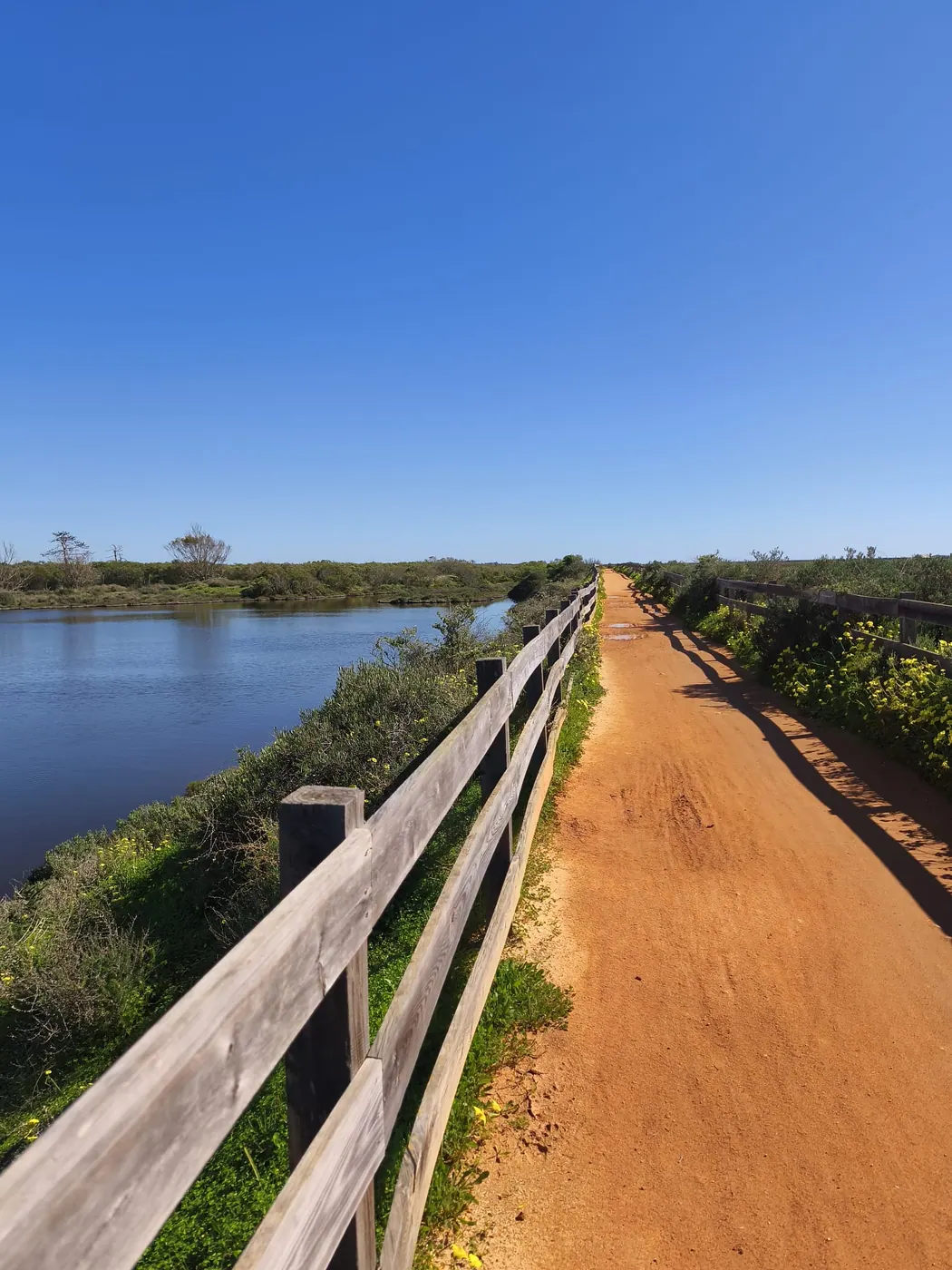

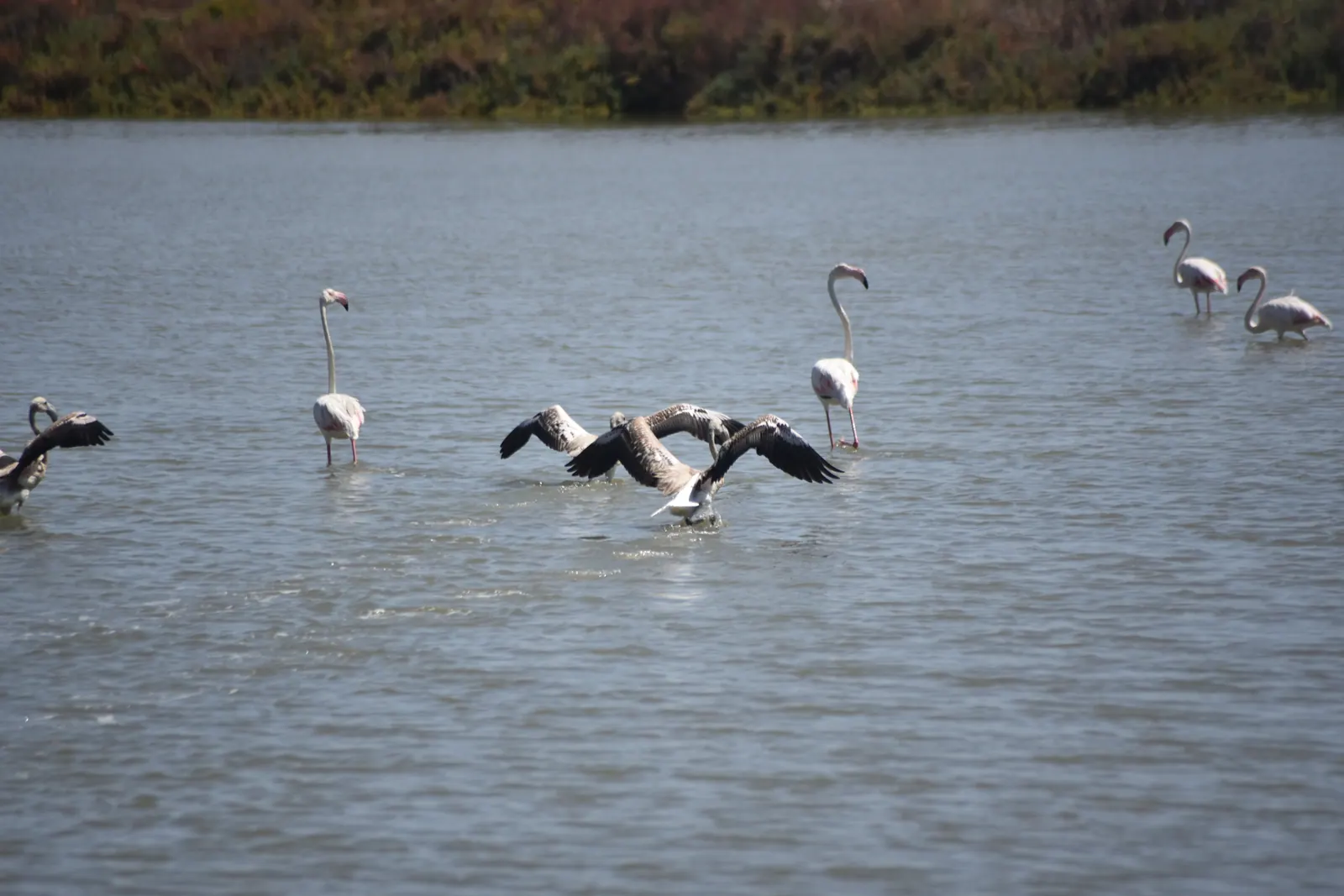
Yes, there are flamingos in the Algarve, and you can see them all year. The best places are the salt pans and shallow lagoons of the Ria Formosa, a few minutes from Faro, and the marshes of Castro Marim, near the Spanish border. On our walks in the Ria Formosa, flamingos have been with us every single time so far. Here is where to find them, when to go, and how to watch them without disturbing them.
The best places to see flamingos in the Algarve
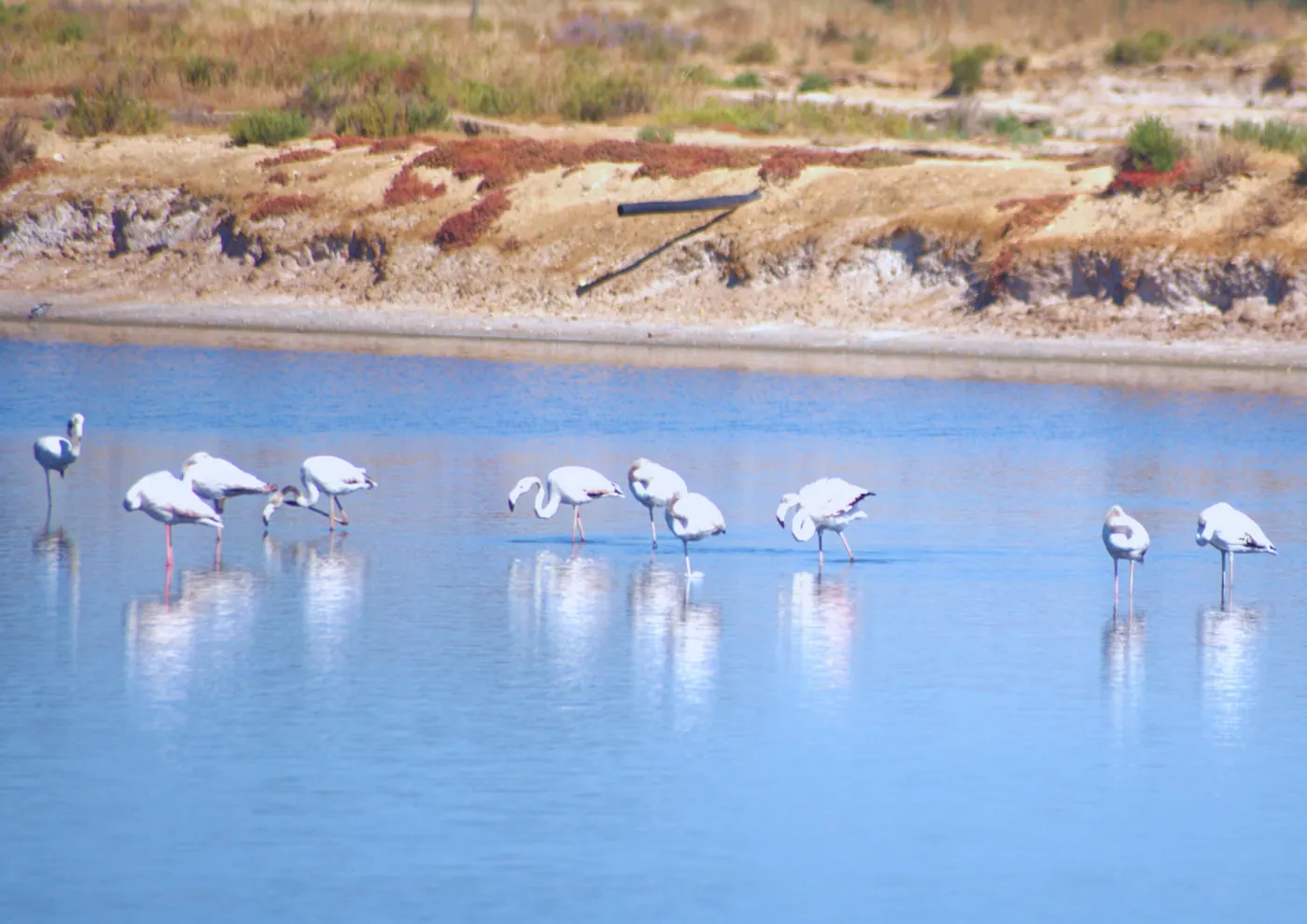
The Ludo salt pans, Faro
The closest spot to Faro, about 10 minutes from the city and right next to the airport. The salt pans along the Ludo Trail are a feeding and resting area for flamingos, often only a few dozen metres from the path. There is free parking on the south side of the airport, and the trail is flat. Our Ludo Trail guide describes the route.
Quinta do Lago
West of the Ludo, the São Lourenço trail leads to a bird hide over a small lagoon. Flamingos feed in the shallow parts of the lagoon, together with spoonbills and herons.
Olhão and Quinta de Marim
The salt pans around Olhão and the Natural Park headquarters at Quinta de Marim often hold flamingos, especially at low tide.
The Tavira salt pans
At the eastern end of the Ria Formosa, the large salt pans between Tavira and Santa Luzia are one of the most reliable places for big groups of flamingos.
Castro Marim
The Castro Marim and Vila Real de Santo António marsh nature reserve, at the mouth of the Guadiana, is where flamingos bred successfully in Portugal for the first time (more on that below).
When to see flamingos in the Algarve
Flamingos are in the Algarve all year. Numbers are highest in spring and autumn, when birds moving between breeding and wintering areas stop here, but there are good numbers in summer too.
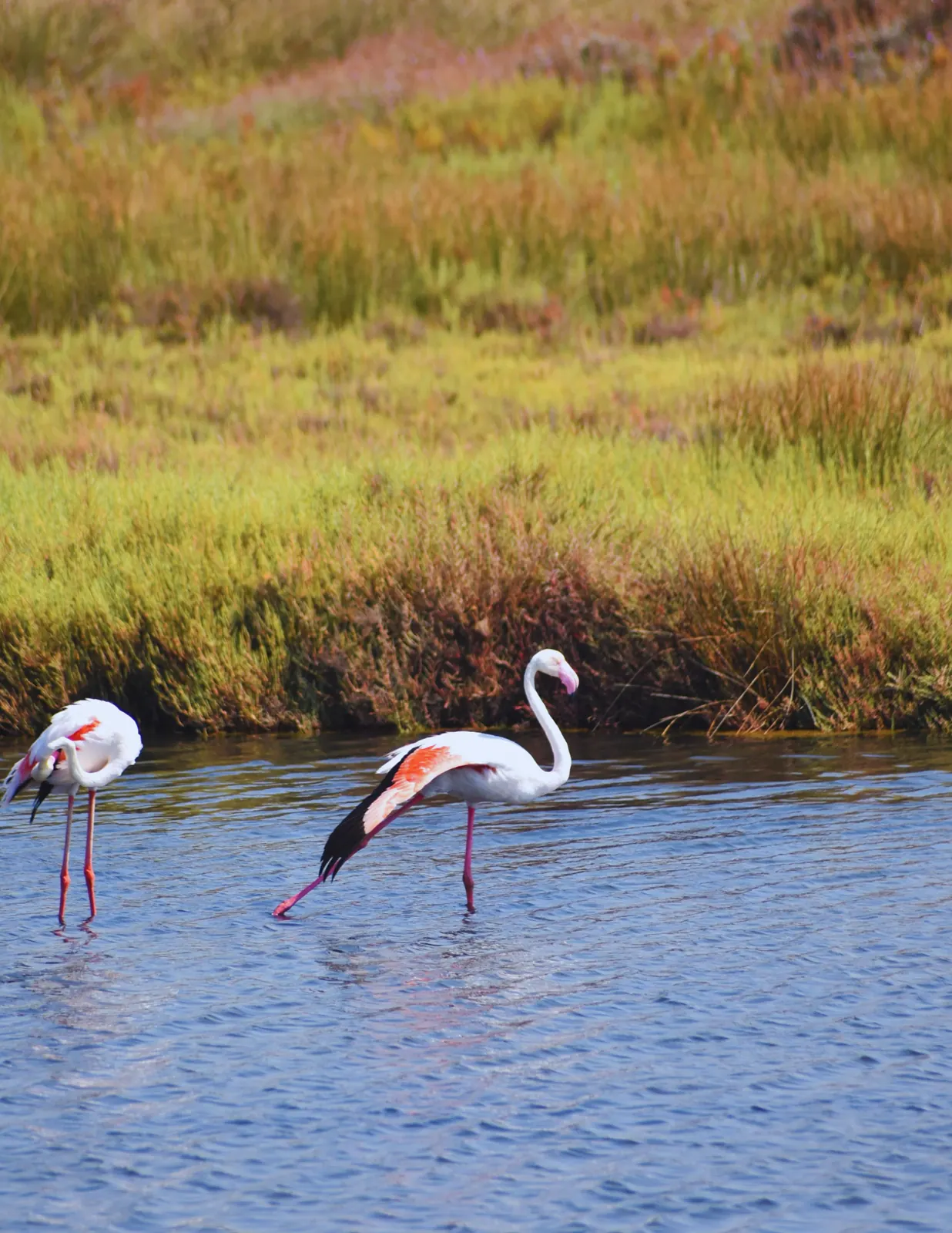
The time of day matters more than the month. Early morning and late afternoon are best: the birds are active and the low light turns their pink feathers almost orange. On the lagoon side, a falling or low tide exposes the mud where they feed. In the salt pans, the water level is controlled by the salt workers, so the tide matters less.
Do flamingos breed in the Algarve?
Yes, since recently. In July 2021, the first successful breeding of greater flamingos in Portugal was recorded in a private salt pan in the Castro Marim marsh reserve: around 880 nests and about 550 chicks, in a colony of some 3,000 birds. The breeding season usually runs from March to July. Breeding colonies are very sensitive to disturbance, which is why the exact sites are protected and closed to visitors.
Why are flamingos pink?
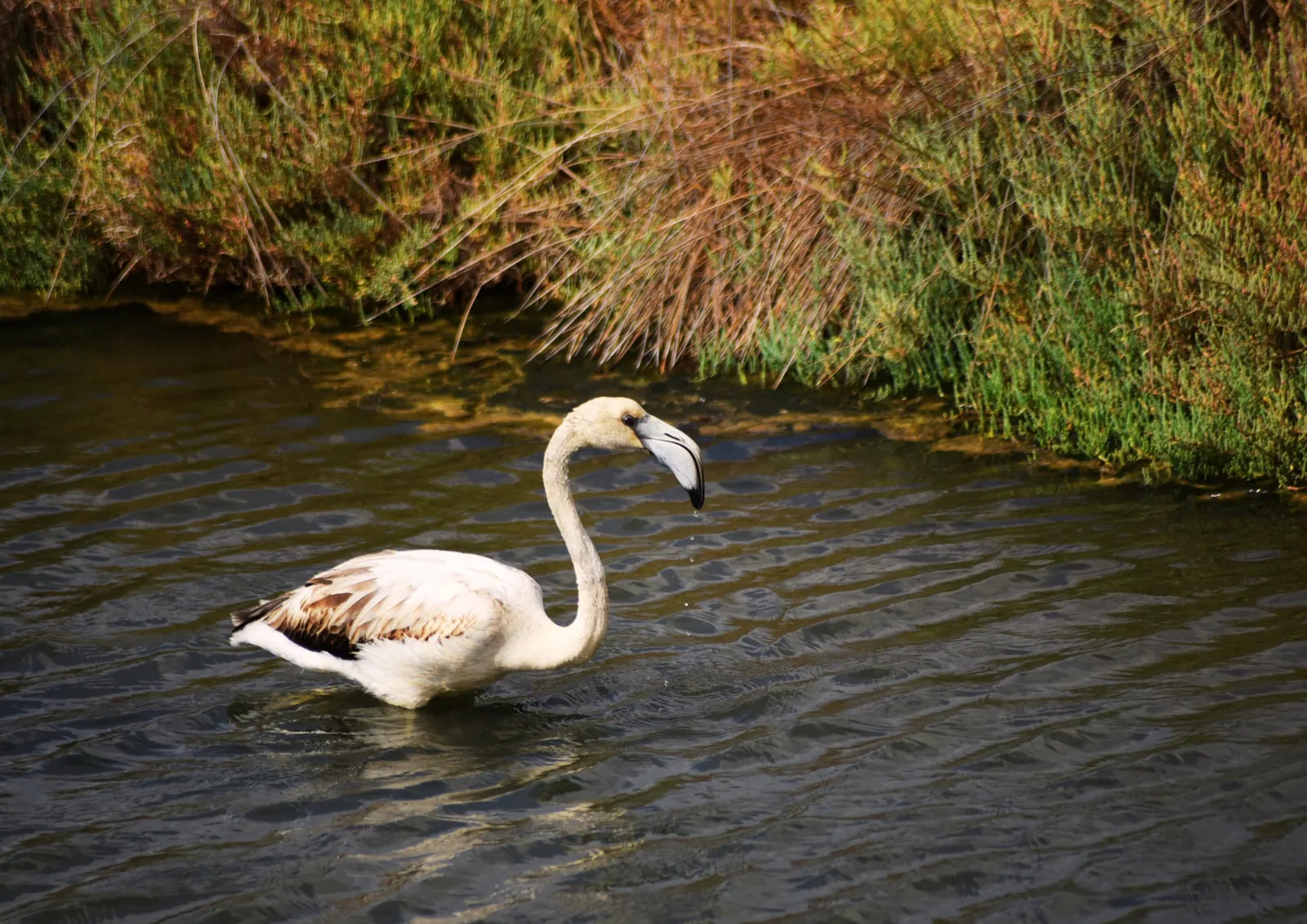
Flamingos are not born pink. The chicks are grey, and young birds stay pale for a few years. The colour comes from what they eat.
In the shallow, salty water of the salt pans live brine shrimp and microscopic algae rich in carotenoids, the same family of pigments that colours carrots. A flamingo feeds with its head upside down, pumping water through its bill and filtering out these tiny animals and algae. The pigments are deposited in its feathers, skin and legs. More pigment in the diet, deeper pink in the plumage.
Greater flamingo facts
- Species: greater flamingo, Phoenicopterus roseus, the largest of the world's flamingos.
- Size: adults stand up to about 1.5 m tall.
- Feeding: the bill works like a sieve, with the head held upside down in the water.
- In flight: neck stretched forward and legs trailing behind, with black flight feathers that only show when the wings open.
- Young birds: grey-brown at first, gradually turning white and pink over several years.
- Social birds: they feed, rest and fly in groups, and nest in dense colonies.
How to watch flamingos without disturbing them
- Stay on the trails and outside the salt pans, which are private and working.
- Keep your distance. If the group starts walking away from you, stop or step back.
- Use binoculars or a telescope instead of getting closer.
- Keep voices low, and never use drones near the birds.
- In the breeding season, from March to July, give any group extra space.
Photographing flamingos
The best light is in the last two hours before sunset, when the birds glow against the water and you can catch their reflections in the salt pans. A telephoto lens (300 mm or more) lets you fill the frame without getting close. Our Sunset Walk is designed around that light, with frequent stops for photographs.
Seeing flamingos with a guide
On our Birdwatching & Nature walk and on the Sunset Walk, both on the Ludo Trail, we watch the flamingos through a telescope and explain how they feed, why they are pink and why the Ria Formosa matters to them. For more birds and places, see our guide to birdwatching in the Ria Formosa.
Frequently asked questions
Are there flamingos in the Algarve all year?
Yes. Numbers vary with the season, with most birds in spring and autumn, but you can see them in every month.
What is the best month to see flamingos in the Algarve?
Spring (March to May) and autumn (September to November), when numbers are highest.
Where can I see flamingos near Faro?
In the salt pans along the Ludo Trail, about 10 minutes from the city centre, next to the airport.
Why are flamingos pink?
Because of carotenoid pigments in the brine shrimp and algae they eat. Chicks are grey.
Can you see flamingos for free?
Yes. The Ludo Trail and the other public trails in the Ria Formosa are free, and the salt pans are visible from the paths.
Do flamingos breed in the Algarve?
Yes. The first successful breeding in Portugal was recorded in July 2021, in a salt pan in the Castro Marim marsh reserve.
Sources and further reading
- Público: Nasceram 550 flamingos, a primeira vez no Algarve (5 July 2021, in Portuguese)
- Lands: Os melhores lugares para encontrar flamingos no Algarve (in Portuguese)
- The Portugal News: The flamingos of the salt pans
- We Travel Portugal: Flamingos in the Algarve
- First Nature: Wildlife of Parque Natural da Ria Formosa